
Question: In the introduction to Krsna Book, Srila Prabhupada writes, “The killing of the demons in Vrndavana was carried out only by the Viṣṇu portion of Kṛṣṇa.”
In Chapter 21 of the Nectar of Devotion: “Kṛṣṇa also possesses five other qualities, which are manifest in the body of Nārāyaṇa, and they are listed as follows: # (59) He is the giver of salvation to the enemies whom He kills.”
SB 3.32.8
“Worshipers of the Hiranyagarbha expansion of the Personality of Godhead remain within this material world until the end of two parardhas, when Lord Brahma also dies.”
References:
https://vedabase.io/en/library/kb/introduction/
https://vedabase.io/en/library/nod/21/
https://vedabase.io/en/library/sb/3/32/8/
Q1: Who amongst the 3 Viṣṇu’s does the killing in Vrndavana?
Q2: Do/can the 3 Viṣṇu’s grant salvation?
Answer for Q1 by Romapada Swami:
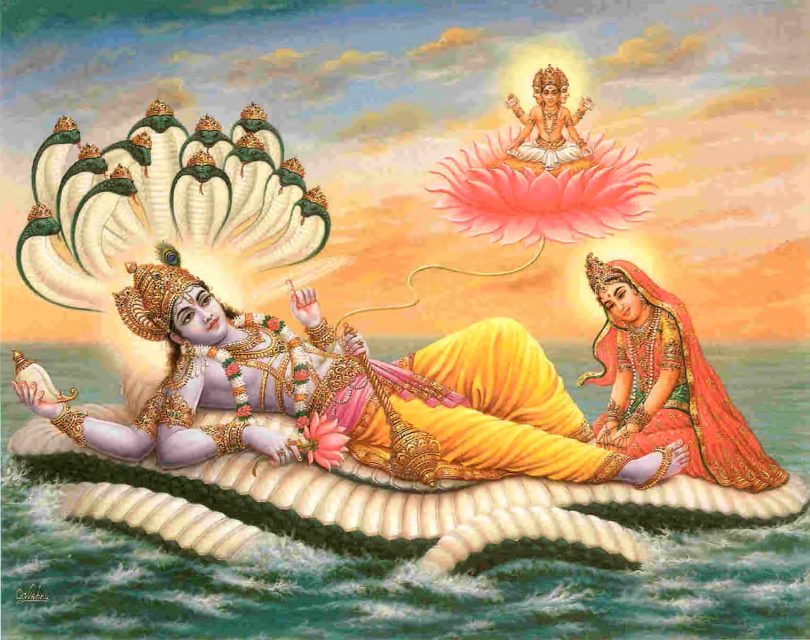
Kṛṣṇa is the original source of all incarnations, including the purusa-avataras—Maha- Viṣṇu, Garbhodaka-sayī Viṣṇu, and Ksīrodaka-sayī Viṣṇu. In this way, we can say that even Viṣṇu comes from Kṛṣṇa. From Ksīrodaka-sayī Viṣṇu all the various incarnations manifest—such as Nṛsimha, Varaha, and others.
Kṛṣṇa does not need to descend personally to kill demons; simply by His will they could be destroyed. But He comes personally to show love and protection to His devotees, and to reciprocate with them. When He descends, He comes in full—with all His energies, expansions, and incarnations. Although difficult to grasp with our limited understanding, the truth is that Kṛṣṇa is always complete, whether in the spiritual realm or appearing here.
Srila Prabhupada has nicely explained this in the introduction of Kṛṣṇa book. Please find below:
“For affairs of the material creation, Lord Mahā-viṣṇu, the plenary portion of Kṛṣṇa, is in charge. Thus, when the Lord descends, the incarnation emanates from Viṣṇu. Mahā-viṣṇu is the original cause of the material creation, and from Him Garbhodaka-śāyī Viṣṇu expands, and then Kṣīrodaka-śāyī Viṣṇu. Generally, all the incarnations appearing within this material universe are plenary expansions from Kṣīrodaka-śāyī Viṣṇu. Therefore, the business of minimizing the overload of sinful activities on this earth does not belong to the Supreme Personality of Godhead, Kṛṣṇa Himself. But when Kṛṣṇa appears, all the Viṣṇu expansions join with Him. Kṛṣṇa’s different expansions – namely Nārāyaṇa, the quadruple expansion of Vāsudeva, Saṅkarṣaṇa, Pradyumna and Aniruddha, as well as partial plenary expansions like Matsya, the incarnation of a fish, and the yuga-avatāras (incarnations for the millennium) and the manvantara-avatāras (incarnations associated with the reigns of the Manus) – all combine together and appear with the body of Kṛṣṇa, the Supreme Personality of Godhead. Kṛṣṇa is the complete whole, and thus all plenary expansions and incarnations always live with Him.
Therefore when Kṛṣṇa appeared, Lord Viṣṇu was with Him. Kṛṣṇa actually appears in order to demonstrate His Vṛndāvana pastimes and in this way attract the fortunate conditioned souls and invite them back home, back to Godhead. The killing of the demons in Vṛndāvana was carried out only by the Viṣṇu portion of Kṛṣṇa.”
___
Thus, the killing of demons in Vṛndāvana is done by the Viṣṇu portion within Kṛṣṇa, while Kṛṣṇa simultaneously delights His devotees by His personal pastimes. Both are true at once. Because all are included within the complete Personality of Godhead, Sri Kṛṣṇa.
Answer for Q2 by Romapada Swami:
In one sense Viṣṇu is non-different from Kṛṣṇa, and there is no distinction between Them.
The only distinction between Viṣṇu and Kṛṣṇa is in terms of Krishna being the fountainhead of all incarnations and is also the source of Vishnu.
Just as in the example of many candles being lit from one original candle, there is factually no fundamental difference. (Cf. Brahma Samhita 46, 39, 47, 48).
Generally by the term Viṣṇu we refer to the plenary expansions in the Vaikuntha region or the purusa avataras in the material region to refer to the majestic (aisvarya) feature of the Lord, whereas worshipers of Kṛṣṇa are more attracted to His sweetness (madhurya) feature since in the feature of Kṛṣṇa there is the greatest degree of intimacy and sweetness of exchange of love between the Lord and His devotees.
Kṛṣṇa’s different incarnations manifest from Ksirodaksayi Viṣṇu. All these incarnations have the power or the potency to award salvation or liberation and descend to the different planets of the material world as also in different species of life to fulfill particular missions. Sometimes He comes Himself, and sometimes His different plenary portions or parts of the plenary portions, or His differentiated portions directly or indirectly empowered by Him, descend to this material world to execute certain specific functions. (Cf SB 1.3.28)
Please refer to Digest 00556 for explanation to your question on SB 3.32.8
Also please find below VCT’ explanation as answered in Digest 00735 previously:
Garbodhakasayi Viṣṇu is Viṣṇu tattva. Why can’t the worshipers go to Vaikuntha after they leave their bodies?
Answer by Romapada Swami: This is also explained in VCT’s commentary to the following verse.
… SB 3.32.8
Verse Translation: “They remain on Satyaloka meditating on Brahma until the end of Brahma’s life of two parardhas.”
VCT Commentary: Brahma is just a gunavatara of the Supreme Lord. The worshippers of Hiranyagarbha by bhakti-misra-jnana gradually attain liberation along with Brahma. Smrti says:
brahmana saha te sarve samprapte pratisancare
parasyante katatmanau pravisanti param padam
“Those who are on Brahma-loka with exalted status at the time of dissolution go directly to the supreme abode, along with Lord Brahma.” Kurma Purasa 1.11.284
However, if they worship only Hiranyagarbha without bhakti for Visnu, then they do not attain liberation when Brahma is liberated. That is explained in three verses. Loka refers to Brahmaloka. They meditate on Brahma (parasya).