
Question : There are 14 Manvantara Avataras. Why is it that among all the manvantaraavatäras, only the four- Hari, Vaikuëöha, Ajita, and Vämana, are the best?
Answer by Romapada Swami:
The response below is based on Çrīla Rupa Goswämé’s Laghu-bhägavatämåta, Part 1 Chapter 4.
Definition & Function of Manvantara-avatāras (Texts 1–3)
- Definition: Lord Mukunda’s incarnations that appear among the demigods to aid Indra and destroy Indra’s enemies, are known as manvantara-avatäras.
- They are also called kalpa-avatāras because their protective function spans specific to one kalpa. Because they appear during the Manus’ reigns they are called Manvantaraavatäras.
- The 14 manvantara-avatäras, beginning with Lord Yajïa and ending with Lord Båhadbhänu, appear, one after another, in the reigns of the Manus beginning with Sväyambhuva Manu.
Four kinds of Lord’s Incarnations: (Text 34)
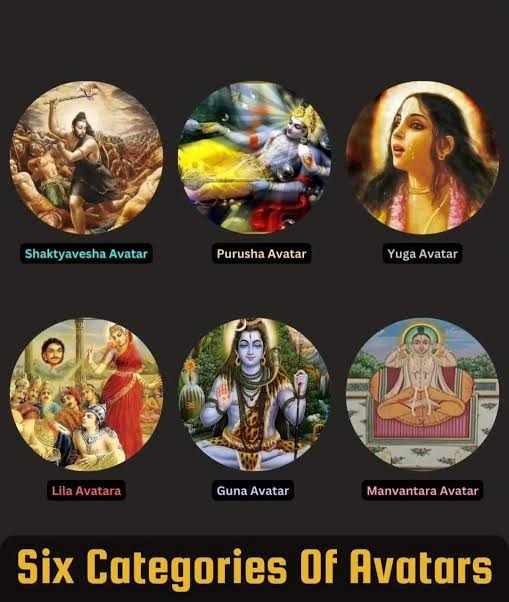
The categorization below in this document is according to the exhibition of His potency. (Not to be confused with another categorization that we commonly hear of according to the role and timing – Purusa-avataras, Guna avatras, Lila Avataras, Manvantara-avataras, Yugaavataras, Avesa avatäras)
- äveça-avatära (çakty-äveça-avatära):
For äveça-avatäras, the status of being an avatära of the Lord is only a metaphor. This is because the äveça-avatäras are jévas. (Text 44)
- präbhava-avatära :
These incarnations are the personal forms of Lord Hari that are less than His parävastha form. There are two categories of präbhava-avatäras:
-
- The first kind is briefly manifest and not very famous. Among them are Mohiné, Haàsa, and the yuga-avatäras beginning with Çukla.
- The second kind are authors of scriptures. Generally, they are great sages.
Among them are Dhanvantari, Åñabha, Vyäsa, Dattätreya, and Kapila.
- vaibhava-avatära :
The vaibhava-avatäras are Kürma, Matsya, Nara’s friend Nräyaëa Åñi, Varäha, Hayagréva, Påçnigarbha, Balaräma, and the fourteen manvantara-avatäras beginning with Yajïa. Note: All 14 Manvantara Avataras are here!
- parävastha-avatära:
para-avasthaù-the Original Personality of Godhead (LB 1.5.10-11). Thus, parävastha-avatäras are almost lik complete form of the Lord. According to the Padma Purana [Uttara 226.42]: “Nrisimha, Ramachandra, and Krishna are complete in all six qualities. They are paraavastha forms of the Supreme Lord, like lamps lit from another lamp.” Thus, the para-avastha forms are described as the most complete manifestations of the Lord.
— Now, coming back to the discussion Why is it that among all the manvantara-avatäras, only the four- Hari, Vaikuëöha, Ajita, and Vämana, are the best?
Texts 50–51 say:
“Among the nine vyüha incarnations Varäha and Hayagréva are the best, and among the manvantara-avatäras four, Hari, Vaikuëöha, Ajita, and Vämana, are the best. These six vaibhava-avatäras are like the parävavastha forms of the Lord”
| #Number | Name of the Manu | Name of the incarnation | Parents of the Incarnations |
| 1 | Sväyambhuva Manu | Yajïa | |
| 2 | Svarociña
|
Vibhu | Vedaçirä and Tuñitä |
| 3 | Uttama | Satyasena | Dharma and Sünåtä |
| 4 | Tämasa | Hari (Gajendra Moksa) | Harimedha and Harini |
| 5 | Raivata | Vaikuëöha (Manifested Vaikuntha Lakshmidevi’s prayers) | Çubhra and Vikuëöhä |
| 6 | Cäkñuña | Ajita (Multidimensional pastime of Churning of the
Milk ocean) |
Vairäja and
Devasambhüti |
| 7 | Vaivasvata | Vämana (Bali Maharaj’s surrender) | Kasyapa and Aditi |
| 8 | Sävarëi | Särvabhauma | Devaguhya and Sarasvaté |
| 9 | Dakña-sävarëi | Åñabha | Ayuñmän and Ambudhärä |
| 10 | Brahma-sävarëi | Viñvaksena | Viçvasrañtä and Viñücé |
| 11 | Dharma-sävarëi | Dharmasetu | Aryaka and Vaidhåtä |
| 12 | Rudra-sävarëi | Svadhämä | Satyasahä and Sunåtä |
| 13 | Deva-sävarëi | Yogeçvara | Devahotra and Båhaté |
| 14 | Indra-sävarëi | Båhadbhänu | Saträyaëa and Vitänä |
Conclusion : While the other ten Manvantara-avataras primarily perform targeted administrative functions of assisting Indra, slaying specific demons, or establishing religious principles, these four enact foundational pastimes that directly connect with the core dynamics of bhakti and these 4 avataras are like the paravastha avatäras of the Lord (Ex of Paravastha avatäras – Rama and Nrsimhadev)